Self-Service Kiosks
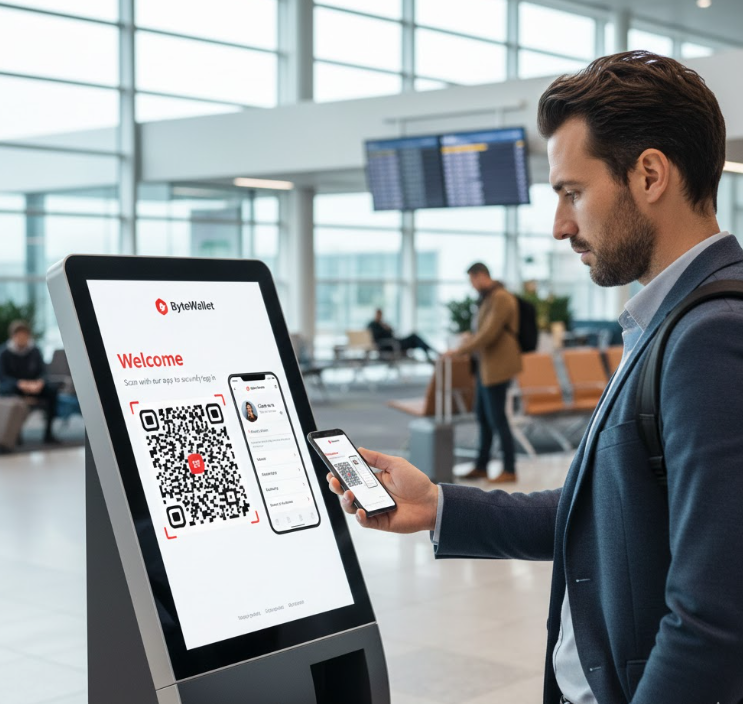
Imagine a traveler approaching a self-service kiosk. Instead of typing confirmation codes or credentials on a shared screen, they scan a QR code with their phone. Biometric confirmation provides secure authentication without exposing sensitive data to the public terminal.
Potential Benefits
- Reduced credential exposure on public terminals
- No typing passwords where others can observe
- Biometric verification adds identity assurance
- Cryptographic signatures provide audit trails
Possible Applications
- Check-in and boarding systems
- Loyalty program authentication
- Lounge access verification
- Self-service rebooking terminals
Integration Approach
ByteAuth provides REST APIs and SDKs (Laravel, Next.js) that can be integrated into web-based kiosk applications. Custom integrations with existing systems would require development work specific to each platform.
Guest Services & Access
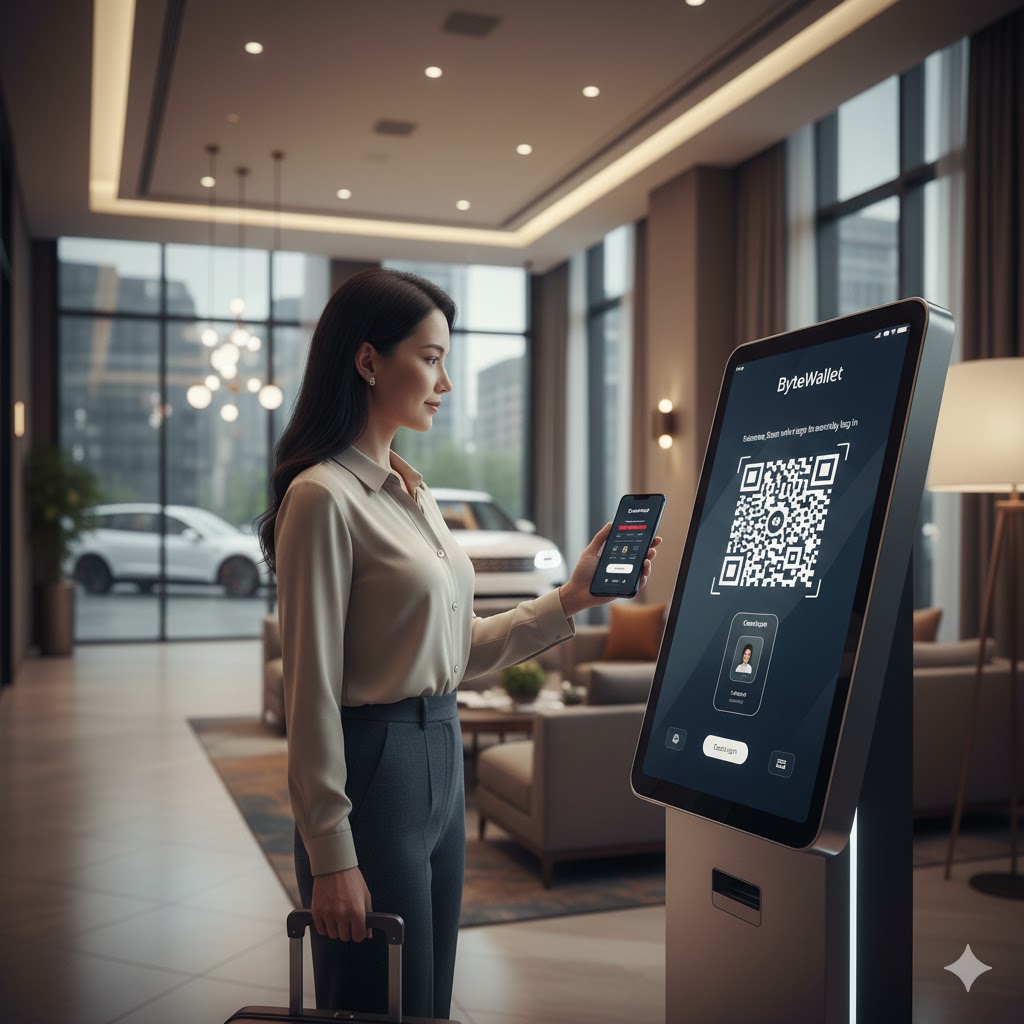
A guest arrives and approaches a self-service station. Rather than providing identification documents to a stranger or typing credentials on a shared device, they authenticate via their personal phone with biometric confirmation, maintaining privacy and security.
Potential Benefits
- Enhanced guest privacy during check-in
- No credential storage on shared terminals
- Reduced friction for returning guests
- Verifiable identity for access control
Possible Applications
- Self-service check-in/check-out
- Room access authorization
- Amenity and service access
- Loyalty program verification
Integration Approach
ByteAuth can be integrated into web-based property management interfaces. Integration with specific PMS platforms, access control systems, or mobile key solutions would require custom development.
High-Value Asset Access
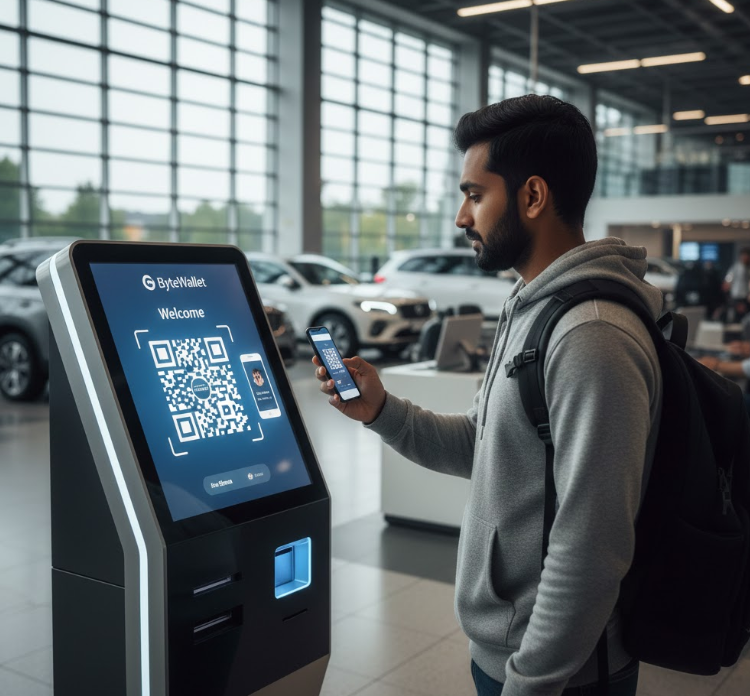
A customer arrives for a scheduled appointment involving access to high-value assets. Instead of presenting multiple forms of identification, they authenticate via ByteAuth, providing cryptographically verifiable proof of identity before gaining access.
Potential Benefits
- Strong identity verification for high-value transactions
- Cryptographic audit trail for compliance
- Reduced identity fraud risk
- Streamlined customer experience
Possible Applications
- Test drive authorization
- Equipment rental verification
- High-value product access
- Appointment check-in systems
Integration Approach
ByteAuth provides web-based authentication that can be integrated into customer-facing applications. Integration with inventory systems, key management, or CRM platforms would require custom development work.